

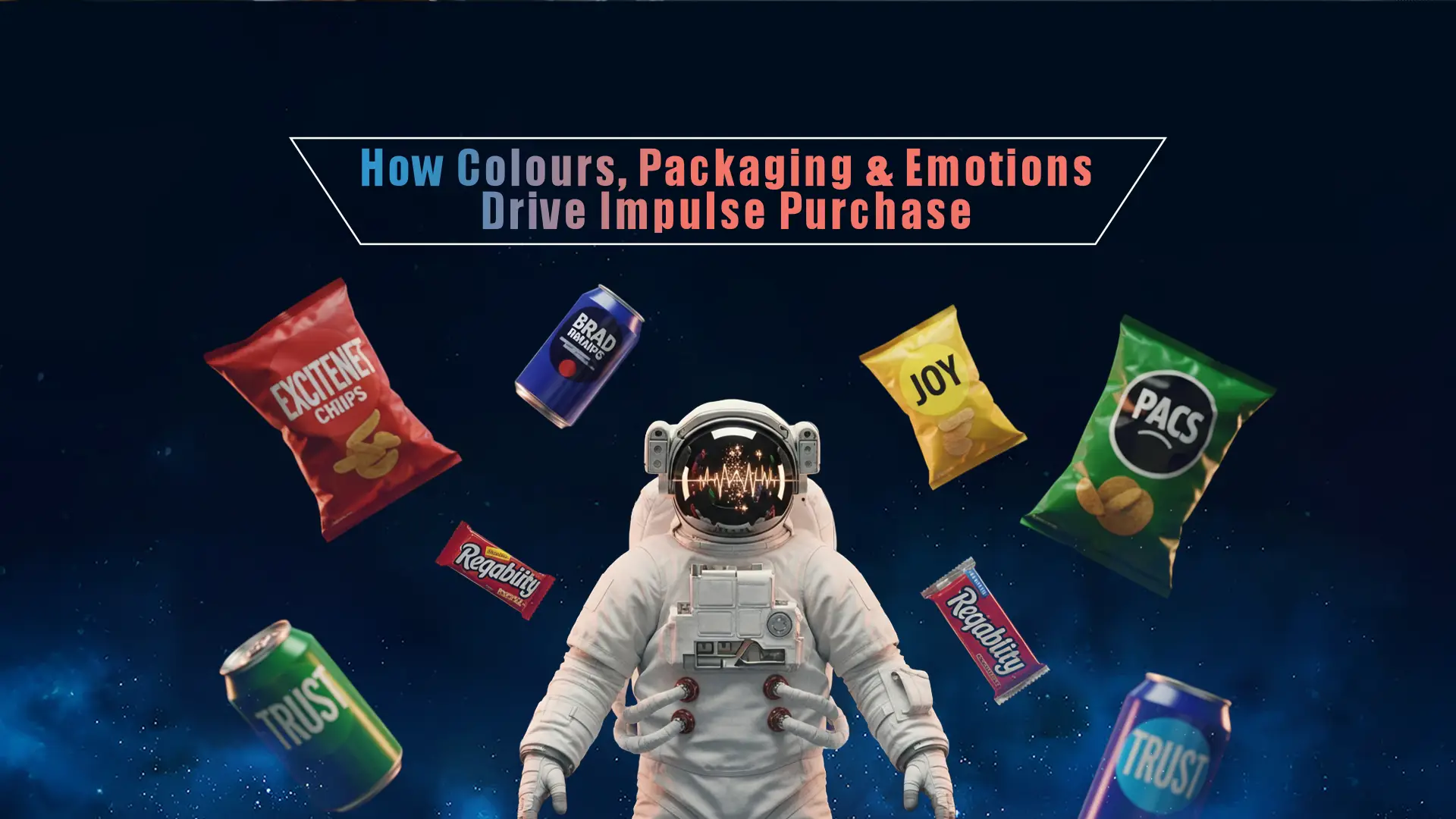
Ever walked into a store to buy toothpaste and walked out with chips, chocolate, and a fizzy drink?
Yep, that’s brand psychology doing its sneaky, brilliant magic.
FMCG brands aren’t just selling products. They’re selling feelings, nostalgia, dopamine hits, and a powerful dose of FOMO. In a category where decisions happen in seconds, branding and psychology are the ultimate retail cheat code, turning a “meh, boring snack” into “OMG I need this now.” Let’s break down how colours, packaging, and emotions quietly turn everyday shoppers into impulse buyers.
How Hues Sneak Into Your Thoughts
Before you read the label.
Before you check the price.
Your brain has already decided.
Did you know that up to 90% of snap judgments about products are based on colour alone? That’s right, before we read a single word on packaging, our brain is already deciding whether it likes the product. Smart branding agencies use this to their advantage.
Key Colour Triggers in FMCG:
- Red triggers appetite and urgency: Think Lay’s, KitKat, Coca-Cola, your brain sees red and goes “yes, I need this now!”
- Blue evokes trust: Dental hygiene brands, bottled water, and health drinks use blue because consumers subconsciously link it with reliability.
- Green signals health and freshness: Organic foods, green tea, and eco-friendly products leverage green to convey wellness.
- Yellow and Orange indicate energy and happiness: snacks, juices, and candies rely on these colors to evoke a sense of cheerfulness and fun.
- Black implies premium quality: From luxury chocolates to high-end personal care, black packaging says “exclusive.”
Smart branding and marketing don’t use colour for decoration; they use colour for persuasion.
Build brands that get picked, not skipped.
Packaging Is the Silent Salesperson
Packaging is FMCG’s unsung hero. According to research, packaging design influences up to 30% of buying decisions, often before price or product details are taken into consideration.
Packaging Elements That Drive Impulse Purchases:
- Shape & Size: Ergonomic or single-serve packs encourage grab-and-go behavior.
- Texture & Material: Matte, glossy, or embossed surfaces convey premium quality subconsciously.
- Visual Storytelling: Mascots, quirky illustrations, or retro designs evoke nostalgia and emotional attachment.
- Convenience Features: Zipper packs, resealable pouches, or handles make usage easier, increasing perceived value.
A classic example? Pringles.
Its iconic cylindrical tube protects freshness, stands out on crowded shelves, and encourages repeat purchases, a classic branding and marketing win.
Emotions Drive Impulse Purchases
Impulse purchases are rarely logical. They’re emotional.
According to Nielsen, over 50% of FMCG buying decisions are driven by emotions rather than price. That’s why successful brands don’t just sell benefits, they sell feelings.
- Joy & Fun: Bright colours and playful mascots make products irresistible.
- Nostalgia: Retro packaging or familiar mascots create an emotional bond. Cadbury’s purple packaging is a perfect example.
- Trust & Reliability: Parents and health-conscious buyers choose brands that feel safe and dependable.
- FOMO (Fear of Missing Out): Seasonal products, limited editions, and exclusive variants create urgency and spur unplanned purchases.
- Reward & Indulgence: Snacks and chocolates tap into self-reward psychology, encouraging spontaneous purchases.
This is branding and psychology working hand in hand, influencing decisions before the brain even realizes it.
Tricks FMCG Brands Use to Boost Impulse Buys
Successful FMCG brands don’t leave impulse buying to chance. They strategies it.
- Shelf Placement: Eye-level positioning increases visibility and purchase likelihood.
- Bundles & Offers: “Buy 1 Get 1” or combo packs trigger dopamine and quick decision-making.
- Interactive Packaging: QR codes, AR experiences, or gamified designs engage modern shoppers.
- Limited Editions & Seasonal Variants: Scarcity + novelty creates urgency and spontaneity.
- In-Store Displays: End-of-aisle or checkout displays increase exposure at the moment of decision.
- Storytelling: Packaging that tells a story or connects emotionally encourages repeated purchases.
A strong branding company ensures these tactics align seamlessly with the brand’s core identity, rather than feeling forced or inconsistent.
Why Brand Psychology Is a Competitive Advantage in FMCG
In FMCG, your product has seconds to make an impact.
Your brand has to speak faster than logic.
When brand psychology, design, and strategy work together:
- Brands feel familiar before they’re tried.
- Trust is built before proof.
- Desire forms before comparison.
That’s the power of intelligent branding and marketing.
Because the most successful FMCG brands don’t push products.
They trigger instincts.
And instincts sell, every single time.